
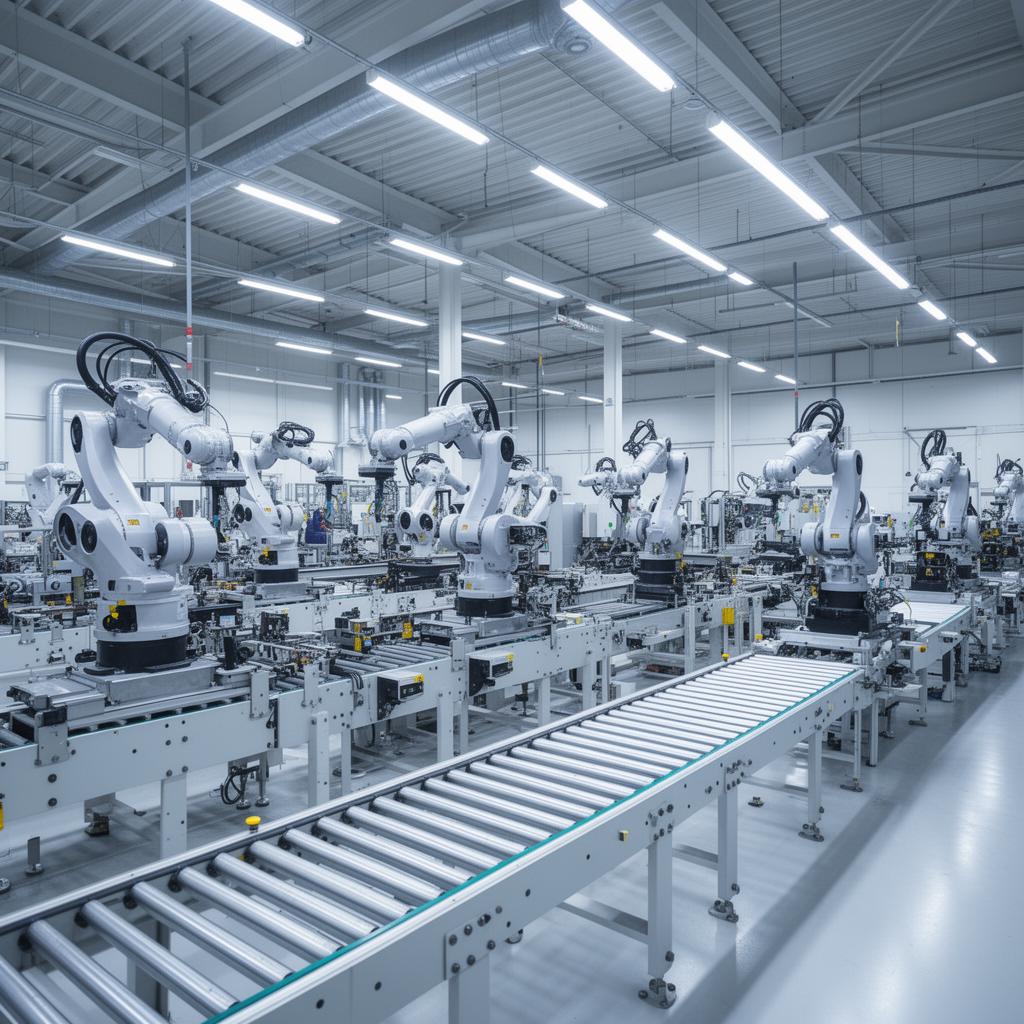
Manufacturing Process Optimization
Process loads carry the largest custom rebate ceilings in Michigan — and the most demanding documentation.
A manufacturing facility is not a building with HVAC and lights attached. It is a production system whose energy intensity is dominated by compressed air, motors, drives, process heating and material handling — loads that operate continuously, that drive measurable kWh, and that the utility custom programs are willing to pay aggressively to reduce. The dollar values are large, and so are the engineering requirements.
We bring PE-stamped industrial energy assessments, production-weighted modeling and a track record across more than two hundred manufacturing applications. The audit is not a checklist; it is a leak survey, a motor inventory, a compressed air baseline and a process heat recovery analysis built into a single defensible document the utility's engineering team will accept on first review.
Why industrial energy projects file thin and capture less.
Most industrial energy assessments are walk-throughs that produce a list of recommendations, not an engineered model the utility custom program can be paid against. The recommendations get implemented one at a time, each filed under the prescriptive schedule, and the largest payment — the custom incentive that pays against the integrated kWh delta across the whole production system — is never claimed.
We file the project as a system, not as a list of equipment. The compressed air audit, the motor population census, the process heat recovery analysis and the production-weighted load model become a single custom application that captures the compounded savings rather than the equipment-by-equipment fragments.

Compressed air, motors, drives and process heat — modeled as one system.

Compressed air is the most consistently underclaimed efficiency category in Michigan industrial. A leak survey alone routinely identifies 20-30% of nameplate kW being lost to atmosphere through fittings, drains and disconnected hoses. Pair the leak repair with a variable-speed drive trim compressor and a properly sized storage receiver, and the system kWh draw drops by a third while the production team notices nothing change.
VSD compressors, no-loss drains, controls sequencing across multiple compressors and waste heat recovery from the aftercooler each carry their own utility incentive and stack cleanly inside the same custom application. The trick is filing them as a system rather than as four separate prescriptive submissions, which is how most facilities lose the largest portion of the available payment.
Motor and drive retrofits across multi-shift operations produce the largest sustained kWh savings in most plants. We inventory the motor population by horsepower, runtime and load factor, then identify which motors warrant VSDs, which warrant premium-efficiency replacement, and which are running so far below load that downsizing is the engineering answer. Each path has a different rebate calculation, and the audit determines which path applies where.
Process heat recovery, condensing economizers on boilers, and waste heat capture from compressed air and refrigeration systems each unlock incentives that would not be available against the equipment in isolation. We extend the model to capture these recovery opportunities and bring them into the same custom application, which is how a project that started as a compressed air retrofit ends up returning seven figures in stacked utility incentives.
The rebate layers that compound across a manufacturing engagement.
Custom industrial incentives
DTE Manufacturing Custom and Consumers Industrial Energy Efficiency programs publish the highest custom incentive ceilings in Michigan for production-weighted kWh savings. PE-stamped engineering and a defensible M&V plan are required, which is exactly how we file every project.
Prescriptive motor, drive and air rebates
Per-horsepower VSD payments, premium-efficiency motor replacements, no-loss drain incentives and compressed air controls upgrades each carry prescriptive rebates that stack on top of the custom application without conflict.
Strategic Energy Management
Multi-year continuous-improvement programs pay annual incentives for sites that demonstrate ongoing kWh reduction against an established baseline. This converts a one-time capture into a recurring revenue stream that often funds future capital projects.
Federal IRA §48 and §179D
Industrial heat recovery, combined heat and power, and qualifying envelope upgrades open additional federal credit and deduction value layered on top of the utility stack. We coordinate the federal claim alongside the state filings.
A four-stage engagement built for production environments and PE-stamped engineering.

Industrial audit
PE-stamped energy assessment of compressed air, motors and process loads.
Custom modeling
Production-weighted kWh model with M&V plan.
Application & approval
Custom incentive submission with engineering backup.
Implementation & capture
Coordinated installation, post-install M&V, rebate payment.
Compressed air system overhaul plus 240 motor VSD retrofits across two shifts. Largest single custom incentive in our 2023 cohort.
Other rebate programs we run end to end.

Ready to model manufacturing rebates for your facility?
Free, no-obligation assessment. We’ll surface every program your project qualifies for within 24 hours.