
LED Lighting Retrofits
The single fastest way to recover capital from your facility — when it’s engineered for incentive, not just installation.
Lighting is the most predictable rebate category in Michigan, and also the one where the most money quietly disappears. The reason is structural: most contractors quote a retrofit by the fixture and move on. Utility rebate programs, on the other hand, pay against very specific photometric, control and pre-approval criteria that change every year. When the spec doesn’t match the program, the incentive shrinks — or vanishes entirely — and the facility owner usually never learns what was missed.
Our team approaches an LED retrofit the way an underwriter approaches a claim. Every fixture in your building is logged, baselined and modeled against the current DTE Energy, Consumers Energy and SEMCO program schedules. We then specify replacements that maximize prescriptive payment and qualify for custom kWh adders on larger projects. The fixture you would have installed anyway becomes the fixture that pays for itself inside of two years — net of rebate, net of fee.
Why most lighting projects leave thirty to fifty percent of the rebate behind.
Utility lighting programs are designed for engineers, not electricians. They reward measured baseline-to-proposed kWh reductions, demand photometric documentation, require pre-approval before equipment is ordered, and impose deadlines that quietly strand projects mid-stream. When a contractor handles an application as a courtesy, you usually receive whatever portion of the rebate fits inside the prescriptive schedule — and lose the larger custom incentive entirely.
We approach every lighting retrofit as an engineering and finance exercise first, and a procurement exercise second. By the time fixtures are ordered, every program eligibility threshold has been met, every pre-approval is locked, and the dollar value of the rebate has been modeled with the same rigor your CFO would apply to a capex submission.

Engineered fixtures, not catalog substitutions.

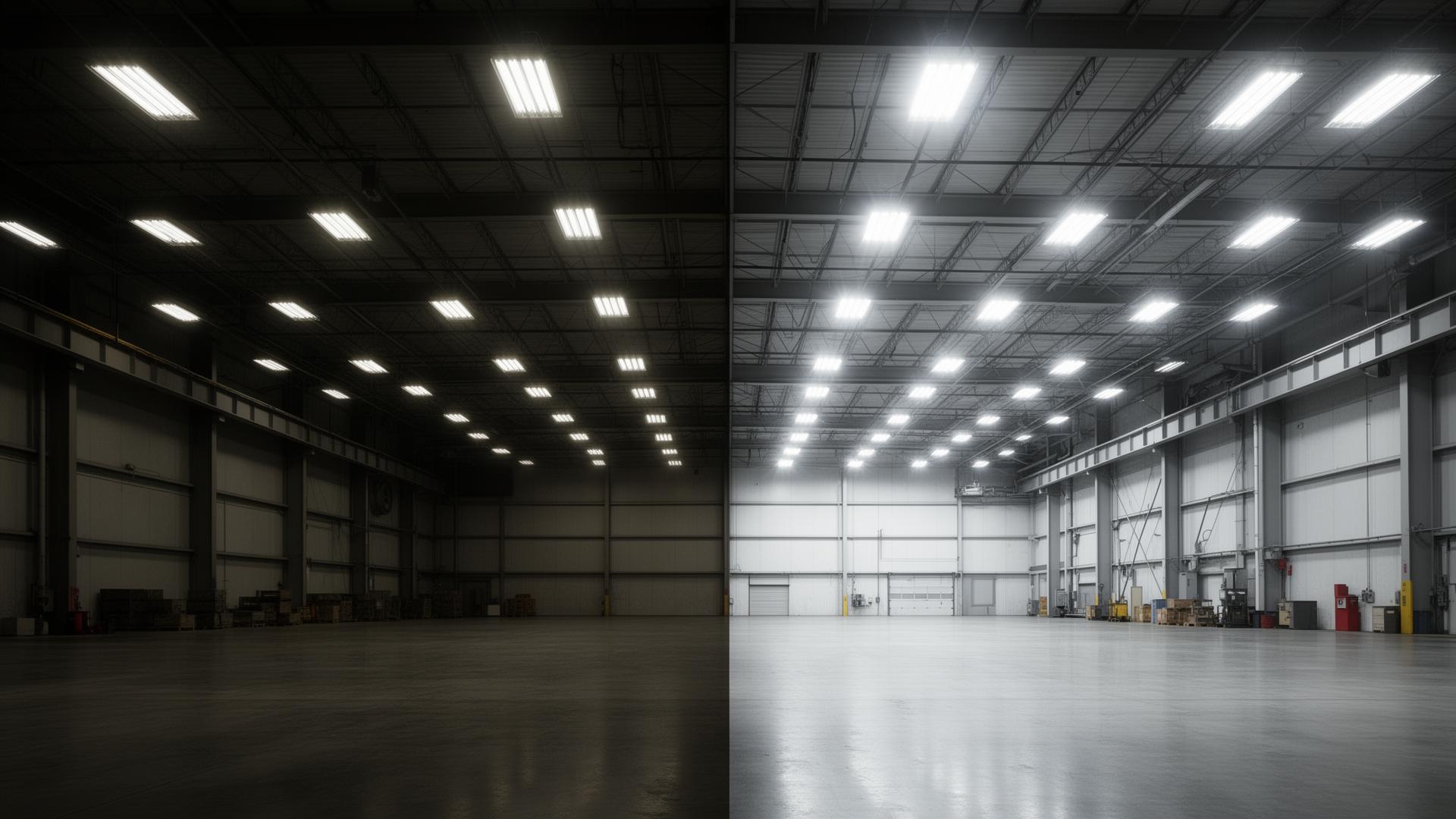
In a distribution or manufacturing environment, we typically replace metal-halide and T5/T8 fluorescent high-bays with networked DLC-listed LED fixtures specified to the program’s controls bonus tier. The result is a sixty to seventy percent reduction in lighting load, an immediate improvement in foot-candle uniformity at the work plane, and a fixture count that often qualifies for the largest custom incentive bracket available in your utility’s territory.
In office, retail and healthcare environments, we lean toward recessed linear panels and tunable downlights paired with occupancy and daylight sensors. The aesthetic upgrade is significant, but the rebate logic is what makes the project pencil: layered fixture rebates, controls bonuses and post-installation verification payments compound into a return that pure-installation pricing simply cannot match.
Every fixture we recommend is justified twice. Once against the utility program criteria that drive the rebate — wattage band, photometric category, controls compatibility, DLC listing — and once against your operating reality, including maintenance access, ambient temperature, vibration profile and the contractor scope you already have under contract. We do not ask you to change vendors. We translate the utility’s requirements into a specification your electrician can install without friction.
Where it makes sense, we extend the project beyond the bulb itself. Networked controls, occupancy zoning and demand-response enrollment are evaluated in the same model and added to the application package whenever they pay for themselves inside the program window. This is the difference between a retrofit that captures a single rebate and one that compounds three or four programs into the same submission.

The four-layer rebate stack we file for almost every lighting project.
Utility prescriptive rebates
DTE Energy Business Solutions and Consumers Energy Business Solutions publish per-fixture and per-watt-reduced incentive schedules that refresh annually. Most of your project value lives here, and most of it is left on the table when the application is filed against last year’s schedule or the wrong fixture category. We file against the current schedule, every time.
Custom kWh-modeled incentives
On larger projects — typically anything above 250 kW of connected lighting load — the prescriptive schedule caps out and a custom program opens up. These rebates are paid against an engineered kWh savings model and require pre-approval before equipment is ordered. This is where the largest single payment on most of our lighting engagements actually originates.
Controls and demand-response adders
Networked controls, occupancy sensors and daylight harvesting carry their own utility incentives, and demand-response enrollment unlocks ongoing capacity payments that continue long after the install is complete. We bundle these adders into the original lighting application whenever the system architecture supports it.
Federal 179D deduction and IRA bonuses
A qualifying lighting upgrade is also a tax event. The Section 179D deduction can return as much as five dollars per square foot, with additional Inflation Reduction Act bonus adders for prevailing wage and apprenticeship compliance. We coordinate with your tax counsel so the federal deduction lands cleanly alongside the utility check.
A four-stage engagement that owns the project from walk-through to wire transfer.
Photometric audit and baseline
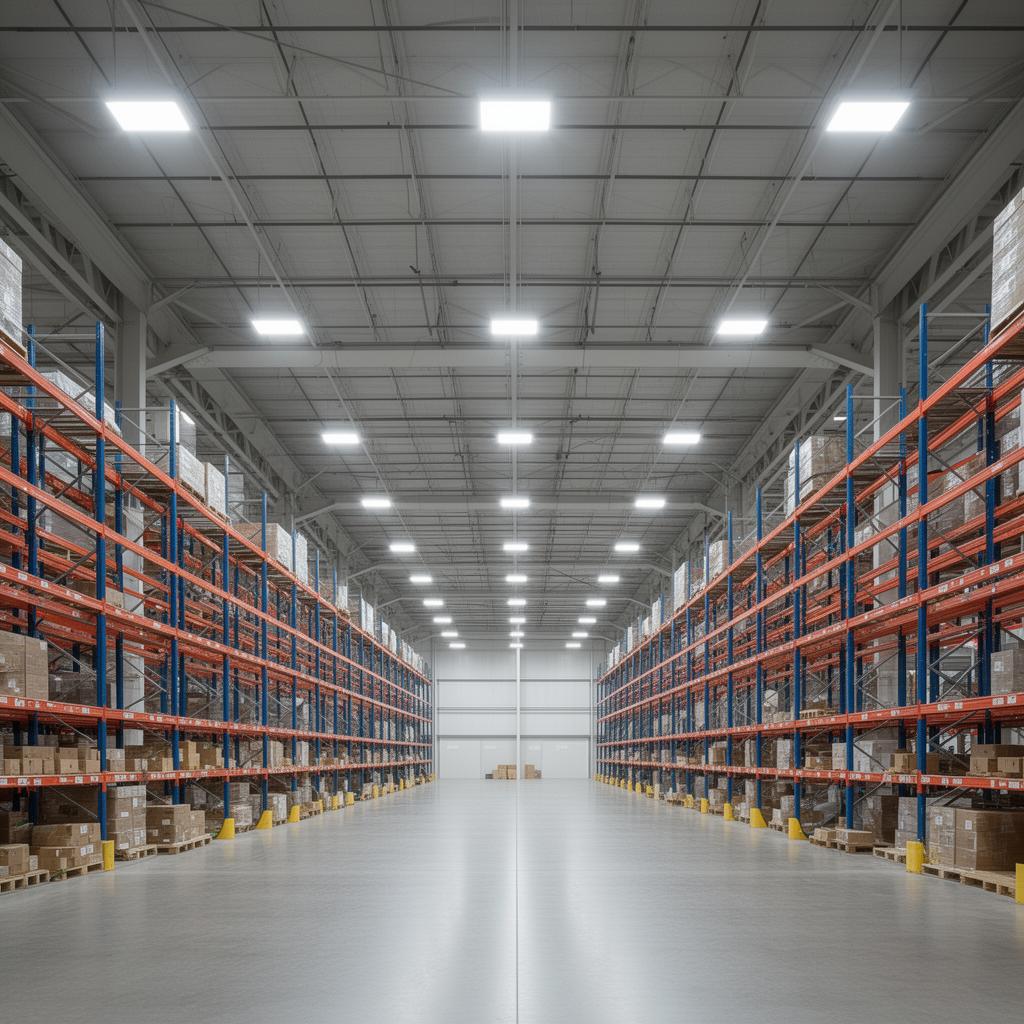
We walk every fixture in your building, log nameplate wattages and operating hours, and benchmark current performance against IESNA targets for the work being performed underneath them. The audit output becomes the baseline that drives every dollar of rebate.
Engineering, modeling and specification
Our engineers select fixtures and controls that maximize both operational outcome and incentive payment. The resulting specification is contractor-ready and program-aligned, with the underlying kWh model preserved for the custom incentive application that follows.
Filing, pre-approval and contractor coordination
Every utility application is submitted, defended and pre-approved before fixtures are ordered. We coordinate directly with your electrical contractor on documentation, photo evidence and inspection scheduling so the install never falls outside the program’s compliance window.
Capture, reconciliation and federal close-out
Once the project is energized we submit closeout documentation, pursue every milestone payment until the full rebate lands in your account, and hand a packaged 179D substantiation file to your tax counsel. You see one reconciled summary at the end — every program, every dollar, every signature.
“The rebate check arrived before our electrical contractor closed out the punch list. Net-of-fee payback came in at fourteen months on a project we’d already approved at thirty-six.”
Other rebate programs we run end to end.

Let’s model what your lighting load is actually worth.
Free, no-obligation walk-through and rebate model for your facility. We’ll surface every program your project qualifies for — and quantify the dollars — within a single business day.